Hi guys, Channy Oddy here from Authentic Pilates.
Do you know ‘Pilates” is a generic term? Following a lawsuit over a trademark, On 19th October 2000, US District Court decreed the Pilates name generic. This opened the door to all kinds of exercise forms jumping onto the proven and well-documented benefits of authentic Pilates and calling themselves or their methods Pilates. This means that anyone without proper training or knowledge about the genuine Pilates method (originally called Contrology) could be giving you a “Pilates “ class.
So how do you know what you’re getting and paying for is real and authentic Pilates?
Today we are going to take a deep dive into the Classical/Authentic Pilates method, so you can better understand the difference and can learn to “spot the fake.”
What is the classical method of Pilates and how does it differ from other methods?
The classical method of Pilates is a system of exercises that was developed by Joseph Pilates in the early 20th century. The Pilates method is based on six principles: breath, concentration, control, precision, flow and centring. These principles are designed to create a balanced workout that strengthens the whole body. The classical method honours the original exercises set out and perfected by Joseph Pilates, and follows the same recommended order of the exercises with the recommended amount of repetitions. It is never set to music, the instructor does little to no talking and the studio is quiet. There is no throwing the body about to loud music and flashing lights.
Let’s use the principles of classical Pilates to highlight what makes Pilates authentic or classical
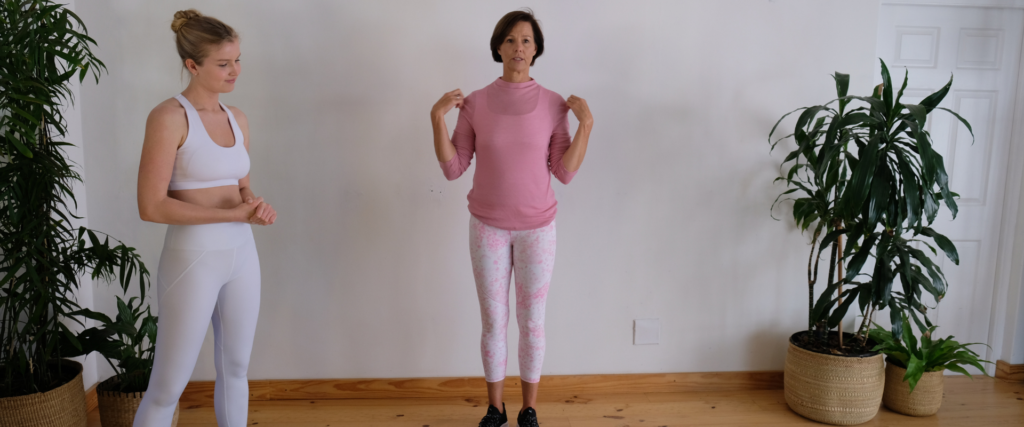
Breath
Suffering from asthma as a child, Joseph Pilates understood the effect of breath on the body, shallow breathing into the top of the lungs allowed stale air to linger in the body, and Joseph Pilates believed this contributed to the disease. “Breathing is the first act of life and the last, our very life depends on it,” he said.
Classical Pilates has many dedicated breathing exercises, the breath is carefully explained and cued to achieve the most out of the exercises. For example, the traditional ending exercise “breathing” on the Cadillac, requires the student to take a deep inhale through the nose simultaneously lifting the hips off the mat with the feet in a trapeze strap, hold the breath for 7 counts, and control the movement back to the mat focusing on expelling all the stale air from the lungs during a seven-count return. In his book Return to the life he explained…. ”long deep breaths to expand the upper chest to capacity while drawing the abdomen in, holding the breath for a short time, then exhaling and always trying very hard to ‘squeeze’ every atom of air from the lungs.”
While not every exercise has a breathing pattern, the classical Pilates has numerous exercises that require the breath to support the spine, use the transverses abdominus to help expel air from the lungs or use the breath to perform the exercise.
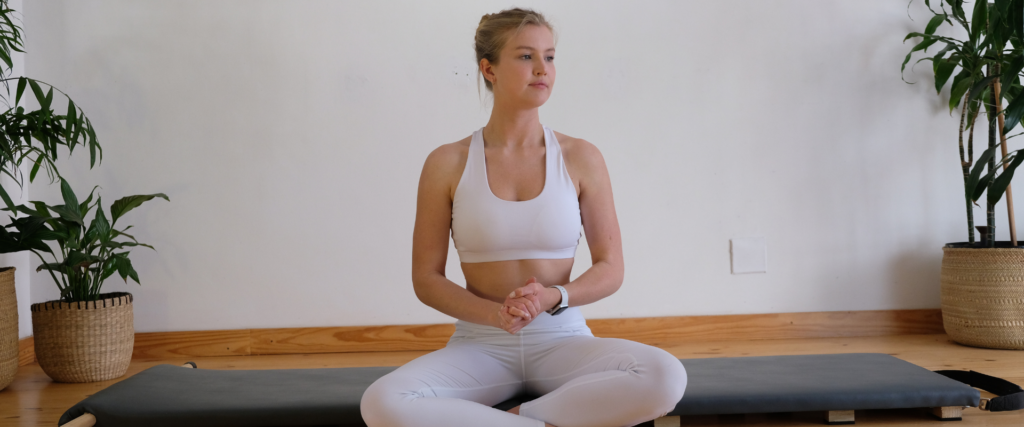
Concentration
Authentic Pilates is a mind and body connection. This is achieved by concentration. Concentration requires the mind to find the right muscle and then to consciously use the mind to perform the exercises. These are not mindless exercises with the body on autopilot and the mind elsewhere. The minute a person’s concentration waivers the control and precision disappears and the trained instructor will gently guide you back into your body with verbal or tactile cues to bring your concentration back into the body.
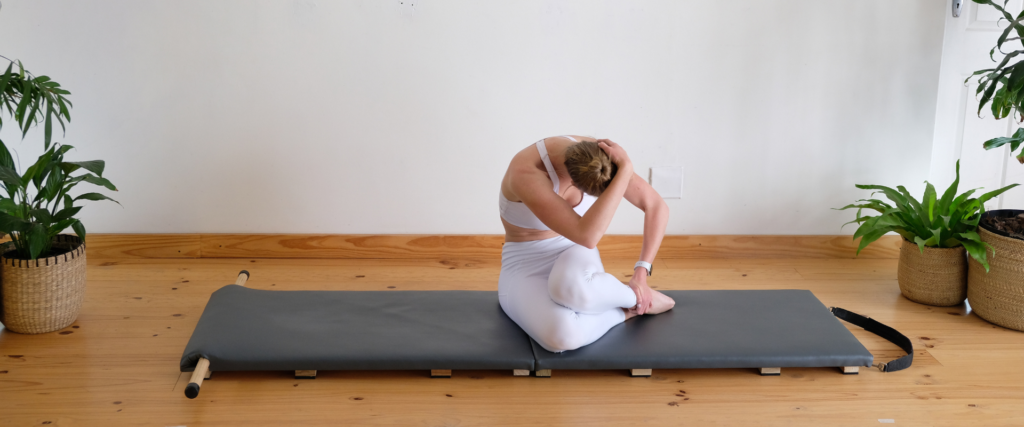
Control and Precision
Interlinked, control and precision go hand in hand. Authentic Pilates looks for control and precision in every exercise with the emphasis on proper form and technique in much the same way that a dance class demands it.
The focus is on quality over quantity. The exercises are performed with controlled movements and precise form. Loud music and talking would distract from this, so authentic studios are quiet. practitioners of the classical method emphasize proper form and technique.
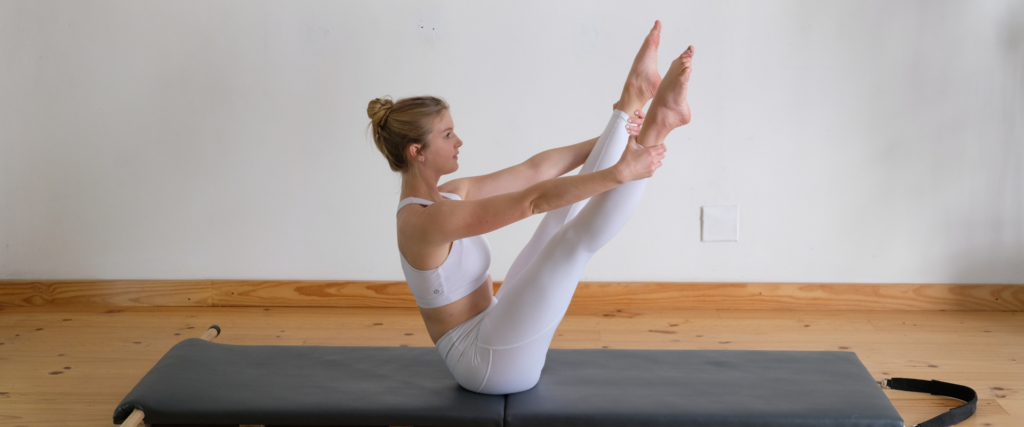
Flow
The workouts are designed to flow smoothly from one exercise to the next often in a set order. A classical/authentic studio will teach you how to transition from one exercise to the other so that the tempo of the class remains upbeat and the energy level stays constant. The transitions allow for a continuously flowing class that becomes an hour-long choreographed exercise. “When Pilates is done right — and it rarely is — every exercise melts into the next one. You never stop. It is like ballet.”- Romana Kryzanowska.
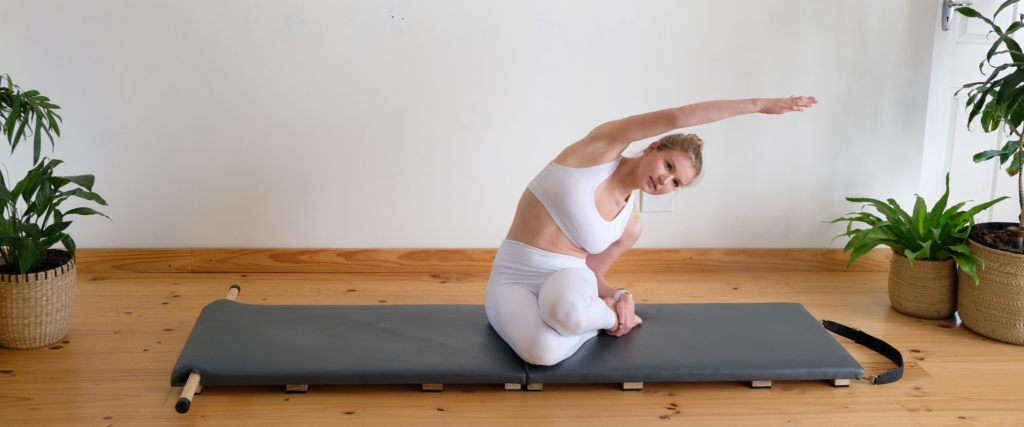
Centring
Centring is using the centre of the body or powerhouse to perform all the exercises. “the theory (is)that almost all of our strength and physical control originates with solid stomach muscles. But it all focuses on the box formed by the points of your shoulders and your hips. The area in that box is your powerhouse — that’s where all your power comes from.- Romana Kryzanowska. In every exercise, we attempt to keep the stomach scooped in and up and strengthen both the stomach and back muscles to create a strong and stable centre.
Classical Pilates is a full-body workout targeting every muscle in the body from the feet to the eye muscles. These differences make the classical method of Pilates an effective and unique way to exercise.
Great article; thank you for trying to set the record straight.
Romana certified 1995